Standing beneath the Kings of Hell, the infernal Princes command vast legions, oversee domains of influence and occupy positions of immense authority throughout demonological tradition.
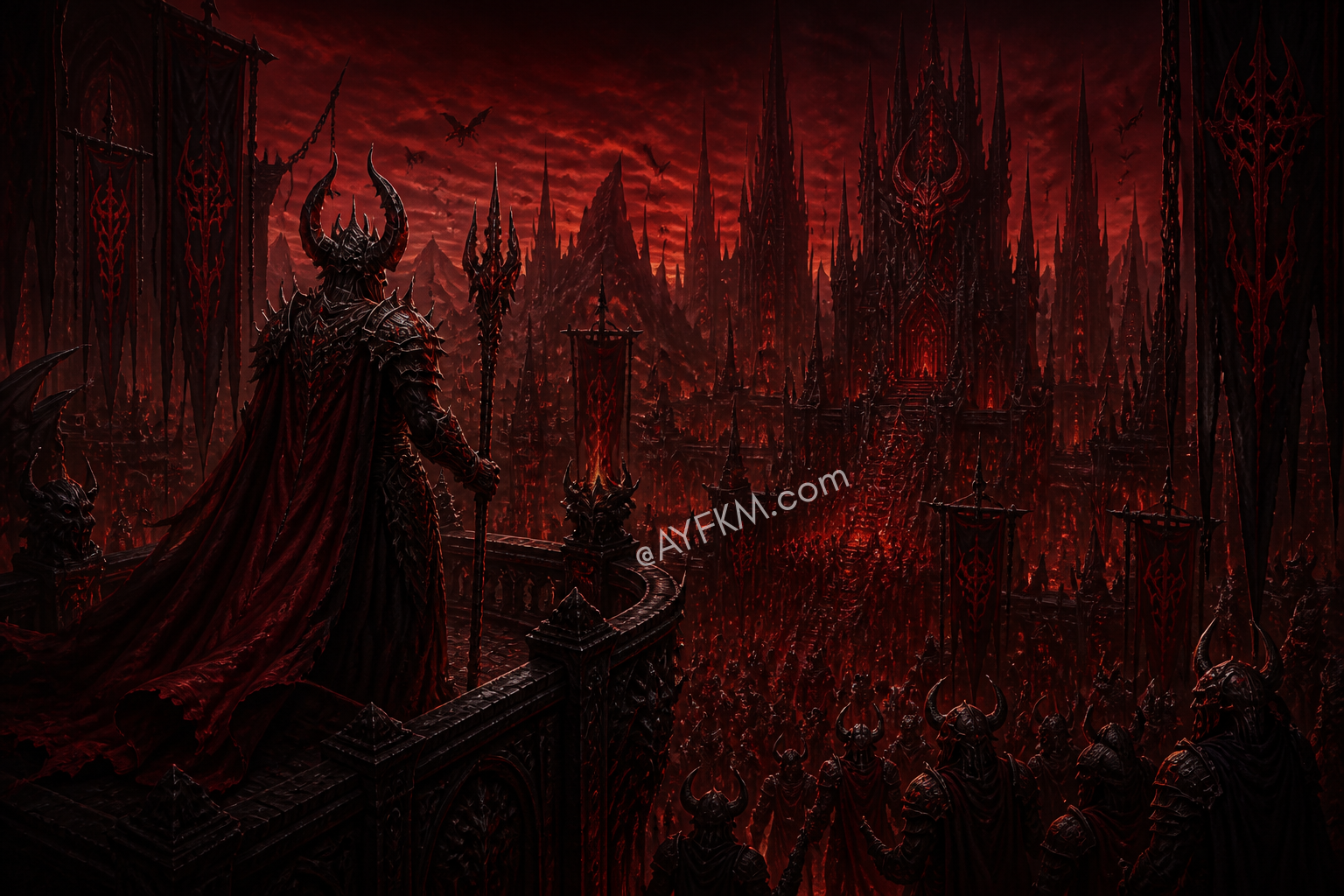
The Princes of Hell are among the most powerful figures within infernal hierarchies, second only to the infernal Kings in many demonological traditions. Throughout grimoires, occult writings and historical demonology, Princes are often described as influential rulers, commanders and governors who exercise authority over vast numbers of infernal spirits.
While their roles differ across traditions, Princes frequently appear as noble figures of immense power, commanding legions, overseeing territories and acting as intermediaries between greater and lesser infernal authorities. Their significance throughout demonological literature has ensured their continued prominence within occult and esoteric studies.
What Is a Prince of Hell?
In demonology, a Prince of Hell is typically considered one of the highest-ranking infernal entities. The title appears throughout numerous grimoires and occult traditions, where Princes are portrayed as powerful figures who command authority across the infernal hierarchy.
Unlike lower-ranked entities, Princes often govern vast legions of spirits and are closely associated with influence, leadership and strategic authority. They may serve as rulers of territories, commanders of infernal hosts or noble authorities acting beneath the Kings of Hell.
Throughout demonological literature, Princes are frequently depicted as sophisticated, intelligent and commanding figures rather than mindless agents of destruction. Many are associated with unique symbols, domains and historical traditions.
The Position of Princes Within Infernal Hierarchies
In many infernal ranking systems, Princes occupy one of the highest positions below the Kings of Hell.
A commonly recognised hierarchy includes:
Kings
Princes
Dukes
Marquis
Earls
Presidents
As senior figures within this structure, Princes often command significant numbers of legions and may oversee lower-ranking infernal nobles. Their authority places them among the most influential entities recorded within demonological traditions.
While the exact duties and influence of individual Princes vary between sources, they consistently appear as major authorities within the infernal realm.
How Grimoires Classify Infernal Princes
Different demonological texts provide varying classifications of infernal spirits and their ranks.
Among the most influential sources are:
The Ars Goetia
Part of the Lesser Key of Solomon, this famous grimoire categorises demons according to rank and authority, including several entities designated as Princes.
Pseudomonarchia Daemonum
Johann Weyer's influential catalogue of spirits presents its own classifications and occasionally differs from later demonological systems.
Dictionnaire Infernal
Collin de Plancy's celebrated reference work helped popularise many demonological classifications and illustrations familiar to modern audiences.
The Grand Grimoire
This text presents a unique perspective on infernal authority, identifying powerful demonic figures and alternative hierarchical structures.
As with many aspects of demonology, classifications can vary significantly depending on the source being consulted.
Why the Rank Matters
Understanding rank helps researchers place individual demons within a wider system of authority.
The title of Prince typically indicates:
Significant authority
Command over numerous legions
Influence within infernal hierarchies
High status within demonological traditions
Prominence within historical grimoires
Although individual powers and responsibilities differ, the rank provides valuable context for understanding how a particular demon was viewed within historical sources.
Differences Between Demonological Traditions
There is no universally accepted infernal hierarchy across all traditions.
Christian demonology, occult grimoires, folkloric traditions and modern interpretations frequently present different views regarding infernal organisation.
Some sources place great importance on noble titles such as Prince, while others focus more heavily on:
Function
Domain of influence
Origin
Religious significance
Mythological context
As a result, the status of certain entities may change between different sources, highlighting the complexity of demonological classification.
Notable Princes of Hell
Several figures have traditionally been identified as Princes within various demonological systems.
These include:
Vassago
Sitri
Stolas
Ipos
Individual classifications vary by source, and some entities may appear under different ranks in different traditions.
Explore the Princes of Hell
Browse the profiles linked here to discover more detailed backgrounds on the Princes of Hell, their domains, symbolism and roles within infernal hierarchies.