Explore the highest-ranking rulers of the infernal realms and their place within demonological traditions.
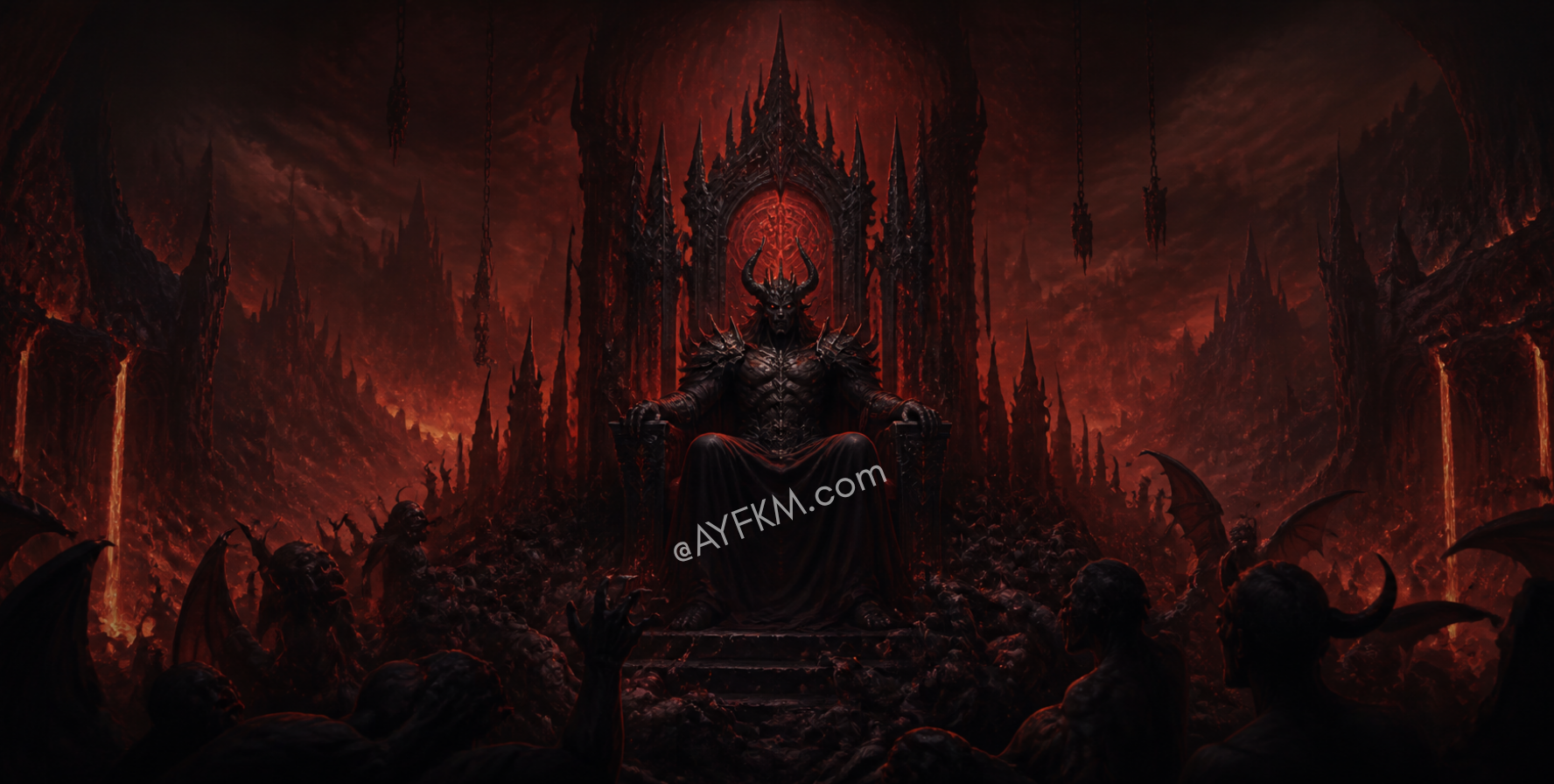
One of the King’s of Hell surrounded by his subordinates and lost souls
The Kings of Hell occupy the highest positions within many infernal hierarchies, commanding vast legions of spirits and exercising authority over lower-ranked infernal beings. Across centuries of demonological literature, grimoires and occult traditions, the title of King represents supreme rank, influence and power.
While classifications differ between texts, Kings are generally depicted as rulers who govern territories, command other demons and possess extensive knowledge or specialised domains. Their appearances, sigils and abilities vary widely depending on the source, but their status as leaders within the infernal hierarchy remains consistent throughout many traditions.
What Is a King of Hell?
In demonology, a King of Hell is typically considered one of the highest-ranking infernal entities. The title appears throughout numerous grimoires and occult texts, where Kings are described as powerful rulers with authority over lower-ranked spirits.
Unlike lesser demons, infernal Kings are often depicted as governing large numbers of legions and exercising broad influence across the demonic hierarchy. Their role extends beyond simple service or specialised tasks, as they are frequently portrayed as leaders, judges, commanders or rulers within the infernal realm.
Depending on the source, Kings may appear as monstrous figures, crowned rulers, animal-human hybrids or majestic supernatural beings. Many are associated with specific symbols, sigils, areas of knowledge or forms of power.
The Position of Kings Within Infernal Hierarchies
In many hierarchical systems, Kings occupy the highest or near-highest rank.
A common order of rank includes:
Kings
Princes
Dukes
Marquis
Earls
Presidents
This structure appears most famously within the Ars Goetia, where various demons are assigned noble ranks that reflect their perceived authority and influence.
As the highest-ranking figures, Kings are often portrayed as commanding subordinate infernal nobles, overseeing territories and governing numerous legions of spirits.
How Grimoires Classify Infernal Kings
Different grimoires and demonological texts do not always agree on classifications.
Some of the most influential sources include:
The Ars Goetia
Part of the Lesser Key of Solomon, the Ars Goetia categorises seventy-two demons by rank, including Kings, Princes, Dukes, Marquis, Earls and Presidents.
Pseudomonarchia Daemonum
Compiled by Johann Weyer in the sixteenth century, this text lists numerous demons and often differs from later classifications.
Dictionnaire Infernal
Collin de Plancy's famous nineteenth-century work expanded upon earlier traditions and popularised many demon illustrations still recognised today.
The Grand Grimoire
This controversial grimoire presents its own hierarchy and demonological framework, including rulers and infernal authorities not always found elsewhere.
Because these sources vary, some entities may hold different ranks depending on which tradition is being consulted.
Why the Rank Matters
Ranks help researchers understand how historical authors viewed relationships between demons.
A rank can indicate:
Level of authority
Number of legions commanded
Importance within a hierarchy
Traditional responsibilities
Status within particular grimoires
For example, a King is generally considered more influential than a President or Earl, though individual traditions may assign unique powers and roles to specific entities.
Understanding rank also helps place individual demon profiles within a broader organisational structure, making it easier to compare figures from different texts and traditions.
Differences Between Demonological Traditions
There is no single universal hierarchy accepted across all forms of demonology.
Christian demonology, occult grimoires, modern demonological writings and folkloric traditions each approach infernal organisation differently.
Some traditions emphasise ranks and noble titles, while others focus on:
Origins
Functions
Domains of influence
Religious significance
Mythological context
As a result, a demon may be considered a King in one source, hold a different position in another or not appear within a ranked structure at all.
For this reason, modern researchers often compare multiple sources when studying infernal hierarchies.
Notable Kings of Hell
The following entities are among the most frequently identified as Kings within demonological traditions:
Bael
King Paimon
Beleth
Purson
Each possesses distinct attributes, symbols, legions and historical interpretations that have evolved across centuries of demonological literature.
Explore the Kings of Hell
Delve deeper into the rulers of the infernal realms. As the archive grows, each profile will explore the history, symbolism, hierarchy and traditions associated with these powerful demonic figures.
Continue Exploring Infernal Hierarchies
Princes of Hell
Dukes of Hell
Marquis of Hell
Earls of Hell
Presidents of Hell